Anticipated changes in legislation and regulations concerning calf housing, together with increasingly stringent industry requirements, are creating a growing need for adapted housing systems.
Study Design
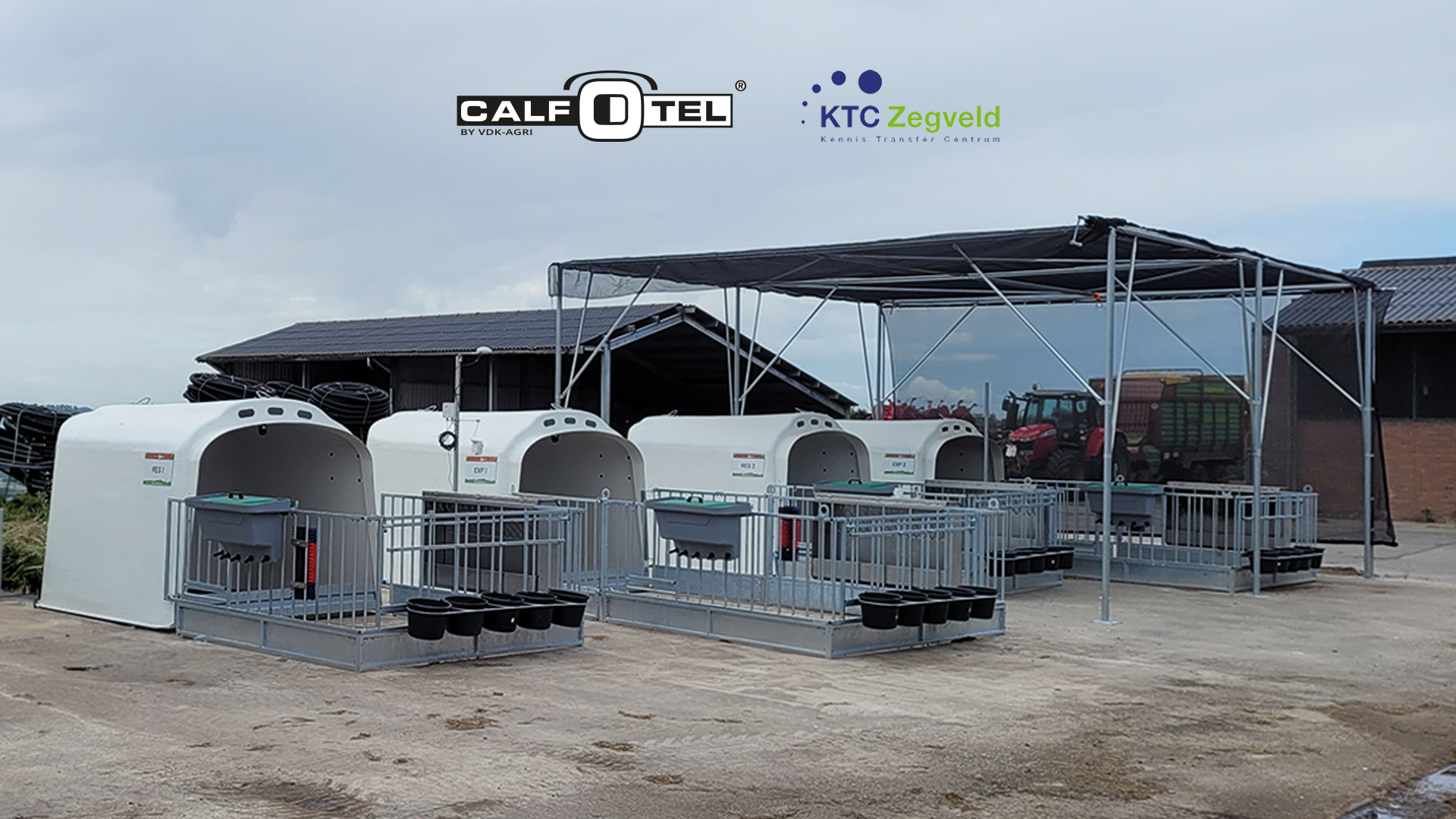
The study focused on comparing the standard CalfOTel XL-5 group housing system with a modified, experimental version of the CalfOTel XL-5. Four group pens were used in total: two standard pens, designated REG 1 and REG 2, and two experimental pens, designated EXP 1 and EXP 2.
Wherever possible, calves aged between two and four weeks were placed in groups of three to four animals with similar ages and health status. Daily management practices remained as consistent as possible with standard farm operations, with particular attention to animal welfare, dry lying areas, regular replenishment of bedding and keeping the outdoor runs clean.
KTC Zegveld and VDK-Agri BV investigated the practical differences between the two housing systems. The study addressed two main research questions:
- Is there a difference in the labour required for the standard and modified XL-5 group housing systems?
- Can calves remain in the modified XL-5 housing system for longer than in the standard XL-5 system?
Study Procedure
The study was conducted over three research rounds. During each round, the time required for various tasks was recorded, including:
- replenishing bedding;
- removing manure from the outdoor runs;
- intermediate manure removal from the housing area;
- cleaning and relocating the housing units.
The length of time calves remained in the housing systems was also recorded. In addition, the caretakers completed evaluation forms to assess their experiences with both types of housing.
Results: Labour Requirements
The results showed no consistent difference in the labour required for the standard and modified housing systems. In some rounds, the modified systems required more labour, whereas in others the standard systems were more labour-intensive.
Across all housing systems and research rounds, replenishing bedding and removing manure from the outdoor runs accounted for the greatest proportion of the time spent on labour. When total labour time was adjusted for the length of the calves’ stay and expressed in minutes per day, the differences between the housing systems were small. This indicates that the daily labour requirements of the two housing types are comparable.
Results: Length of Stay
No difference was found in the length of stay either. In two of the three comparable rounds, calves remained in the EXP2 housing system longer than in REG2, whereas in the second round, the standard housing systems allowed for a longer stay.
The results therefore did not establish that the modified XL-5 housing system consistently enables calves to remain in the system for a longer period.
Caretaker Experiences
The evaluation forms showed that caretakers gave the modified housing system an average rating of 8.5 out of 10. The main advantages identified were:
- the greater available space;
- the drier lying area;
- easier cleaning;
- the ease of moving the calves.
At the same time, most caretakers perceived the modified system as more labour-intensive, particularly when thoroughly cleaning and pressure-washing the larger housing unit. This perception did not fully correspond with the recorded labour times, which showed no consistent differences between the two housing types.
Factors to Consider When Interpreting the Results
Several factors that may have influenced the results should be considered when interpreting the findings. These include the age and development of the calves, the length of stay, weather conditions, the presence of a shade cloth, the use of sensors and the limited number of research rounds.
Furthermore, a complete comparison could not be made during the third research round because the REG1 housing system was not included.
Conclusion
Based on this study, it can be concluded that the modified XL-5 group housing system does not consistently require more or less daily labour than the standard XL-5 group housing system. Nor can it be concluded that calves can consistently remain in the modified system for a longer period.
However, the practical experiences of the caretakers, together with some of the study findings, indicate that the modified housing system has potential and offers advantages in terms of available space, hygiene and potentially the length of time calves can remain in the housing system.
The study was jointly conducted by CalfOTel and KTC Zegveld.
This summary was prepared by KTC Zegveld and approved by both parties.